
The Modern Treasure Hunt: Trusting the Map
Leadership, Decision-Making, Strategy
The Modern Treasure Hunt: Why Trusting the Map Is the Hardest Part
In an age of GPS, dashboards, and endless “how‑to” guides, you’d think finding treasure—whether that means a new market, a promotion, or a breakthrough idea—would be easier than ever. Yet as Jack, a seasoned explorer-turned-consultant, often says, “The hardest part isn’t spotting the treasure. It’s deciding which map to believe.” For professionals navigating complex careers and volatile markets, that metaphor has never been more relevant.
The New Face of Treasure in Professional Life
When Jack talks about “treasure,” he isn’t just referring to chests of gold buried on forgotten islands. In the modern world, treasure looks like:
A career move that unlocks long-term growth rather than short-term burnout
A strategic bet on a new product, market, or technology that actually pays off
A partnership, mentor, or team that elevates your impact instead of draining your energy
These treasures are rarely marked with an obvious X. Instead, they are hidden behind uncertainty, competing priorities, and a flood of information. The challenge isn’t a lack of maps; it’s that there are too many, and most of them are drawn by someone with their own agenda, blind spots, or outdated assumptions.
The Challenge of Finding Treasure in a Map-Saturated World
In Jack’s words, “On the old voyages, you were lucky to have one map. Today, you’re drowning in them.” For modern professionals, those maps show up as frameworks, blueprints, playbooks, and step‑by‑step success stories. Each claims to reveal the shortest route to success. Yet several structural challenges make real treasure harder to find than ever:
Noise masquerading as guidance. Social media feeds, newsletters, and “hot takes” offer constant directions—most of them untested, context-free, or driven by clicks rather than outcomes.
Outdated charts in shifting seas. A strategy that worked five years ago may now be dangerously misleading, especially in industries where technology and regulation move faster than planning cycles.
Hidden incentives. Many maps are created to sell something: a course, a tool, a consulting engagement. That doesn’t make them useless, but it does mean you need to read the legend carefully.
As Jack points out, the modern treasure hunter’s dilemma is not whether to follow a map, but how to evaluate which one deserves your time, capital, and reputation.
Maps You’re Given vs. Maps You Find
Jack draws an important distinction between two kinds of maps: those that are handed to you, and those you discover along the way. Both present unique trust challenges for professionals.
The Maps You’re Given: Inherited Paths and Official Playbooks
Maps you’re given might be your company’s standard career ladder, your industry’s “best practices,” or the strategic plan approved three budgets ago. They come with institutional authority and social pressure to comply. The implicit message is, “Follow this route; it’s tried and tested.”
The risk is complacency: assuming that because a map has been laminated and blessed, it must still lead to treasure.
Another danger is misalignment: a perfectly good map for the organization may be a terrible one for your personal values, strengths, or risk tolerance.
Jack’s advice here is blunt: “Respect the official chart—but don’t confuse it with your compass.” Professionals need to ask: Who drew this map? When? With what assumptions? And whose treasure was it designed to protect?
The Maps You Find: Serendipitous Clues and Unofficial Guides
Then there are the maps you stumble upon: a conversation at a conference, a mentor’s unconventional path, a case study that challenges your assumptions. These “found maps” can be transformative precisely because they don’t come from the usual channels.
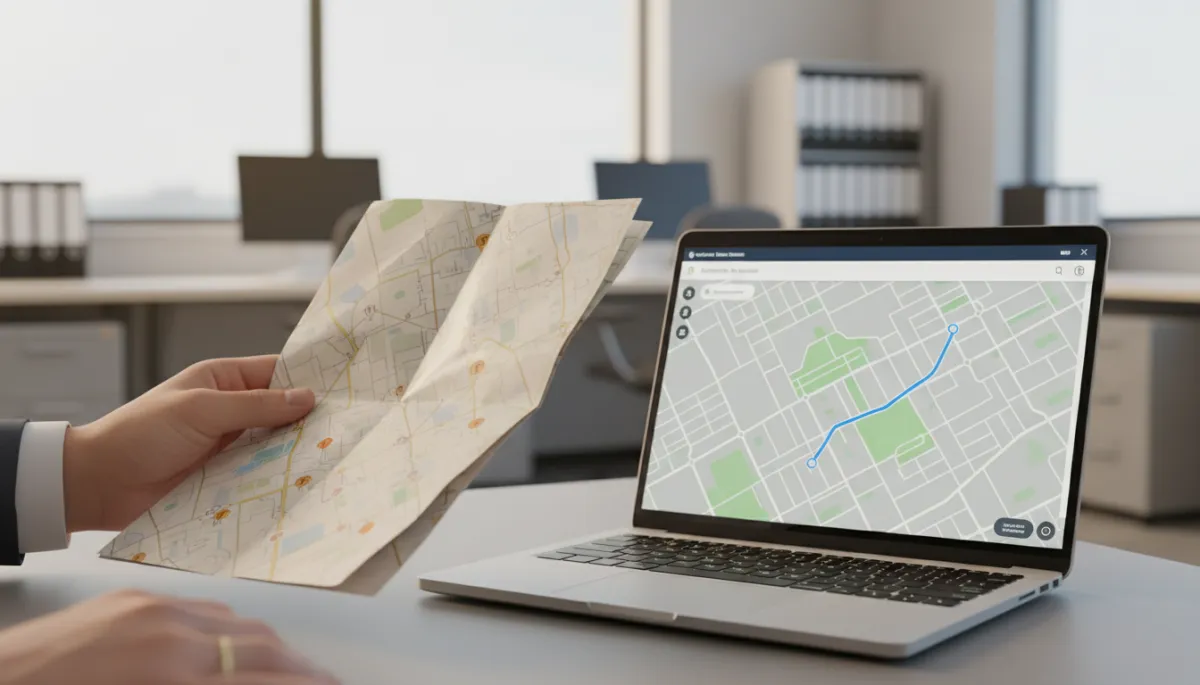
The most valuable clues often appear as unofficial, easily overlooked maps.
Yet Jack warns that found maps come with their own hazards. They may be:
Incomplete—accurate for one stretch of the journey, but silent on the storms ahead
Over-personalized—perfectly suited to the original explorer’s context, but not to yours
Romanticized—turning survivorship bias into a heroic narrative that hides the real odds
Jack’s Framework for Deciding Which Map to Trust
Over years of literal and metaphorical treasure hunting, Jack has developed a simple set of questions professionals can use whenever a new map appears—whether it’s a reorg plan, a career opportunity, or a “can’t-miss” investment:
Does this map match the terrain I actually see? If your lived experience contradicts the neat arrows and milestones, treat that as a red flag, not a personal failing.
Who benefits if I follow it? Understanding incentives—organizational, financial, reputational—helps you separate guidance from persuasion.
What risks are conveniently left off the page? Every map simplifies reality; wise professionals ask what’s been cropped out.
Can I test this route in small steps? Instead of betting your entire career or budget, look for low‑stakes experiments that validate—or invalidate—the map.
💡 Pro Tip: Treat every new strategy or opportunity as a draft map. Annotate it with your own observations before you commit to a full voyage.
Building Your Own Compass in a World of Uncertain Maps
Ultimately, Jack’s discussion about maps is less about cartography and more about agency. The modern professional cannot outsource navigation, no matter how detailed the chart. You still need a compass—your values, priorities, and appetite for risk—to interpret every route you’re shown or stumble across.
Finding treasure in the modern world is challenging precisely because maps are plentiful and certainty is scarce. But by questioning who drew the map, comparing it to the terrain, and aligning it with your own compass, you dramatically increase the odds that when you finally dig, what you uncover will be treasure you actually want to claim.
